
TB-500
Also known as · Thymosin β4 fragment 17–23 · Ac-LKKTETQ-OH · Actin-binding domain
- EvidencePreclinical
- CategoryTissue support & recovery
- RoutesubQ / IM
- Half-lifeShort (acetylated N-terminus)
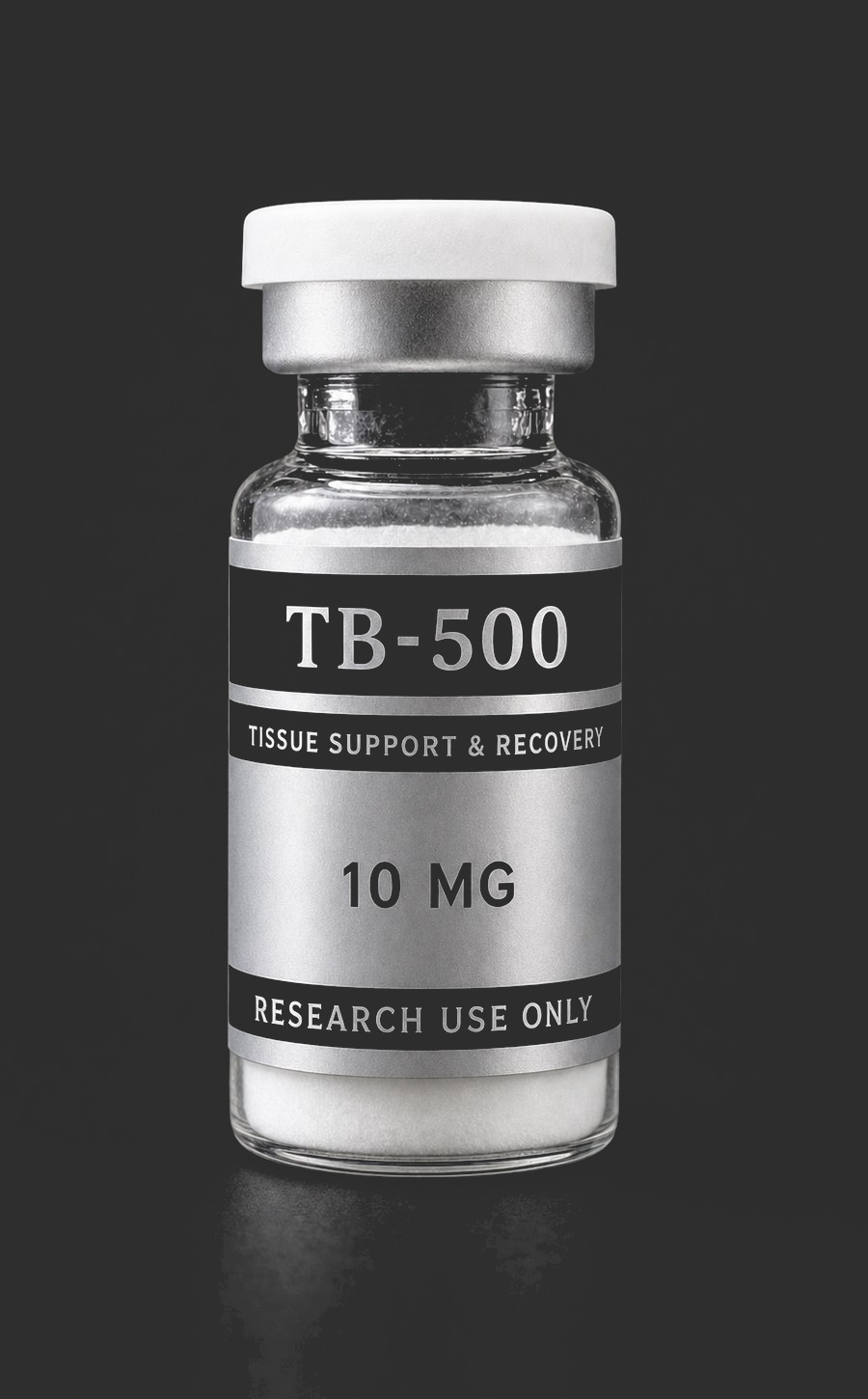
- Form
- Lyophilized powder
- Purity
- ≥98% (HPLC)
- Molecular formula
- C38H68N10O14
- Molecular weight
- 889.0 g/mol
- CAS number
- 885340-08-9
- Sequence
- Ac-LKKTETQ-OH
- COA
- Available on request
In stock
$44.99
For research use only. Not for human consumption. Buyers must be affiliated with a research institution.
01 / Research summary
What the literature reports
TB-500 is the synthetic N-acetylated heptapeptide Ac-LKKTETQ-OH — residues 17–23 of the 43-amino-acid protein thymosin β4. This central sequence is the actin-binding domain through which the parent protein promotes angiogenesis and wound healing.
Cellaire classifies TB-500 as preclinical evidence. Published work by Sosne et al. (FASEB J 2010) characterizes LKKTETQ as the active domain driving corneal wound healing, cell migration, and angiogenesis in animal models. There are no published human dose-ranging trials for the isolated fragment, so no clinical dosing schedule is presented on this page.
02 / Reconstitution
Reconstitution reference
Illustrative unit math for a 10 mg vial reconstituted with 2 mL bacteriostatic water. This is not a dose recommendation.
03 / Overview
Molecular overview
TB-500 is a synthetic N-acetylated heptapeptide with the sequence Ac-Leu-Lys-Lys-Thr-Glu-Thr-Gln-OH. It corresponds to residues 17–23 of thymosin β4, the actin-sequestering protein most abundant in mammalian cells.
The LKKTETQ sequence is the minimum actin-binding domain of thymosin β4. Isolating this fragment lets researchers probe the actin-binding, migration-promoting arm of the parent protein independently of its other actions.
Preclinical work reports the fragment supports fibroblast migration, angiogenesis, and re-epithelialization in rodent and rabbit wound models. Clinical evidence for the isolated fragment is limited to case reports and small unblinded series.
TB-500 is not FDA-approved for any indication. It is listed on the FDA Category 2 bulk drug substances review, meaning the FDA has identified significant safety questions.
04 / References